

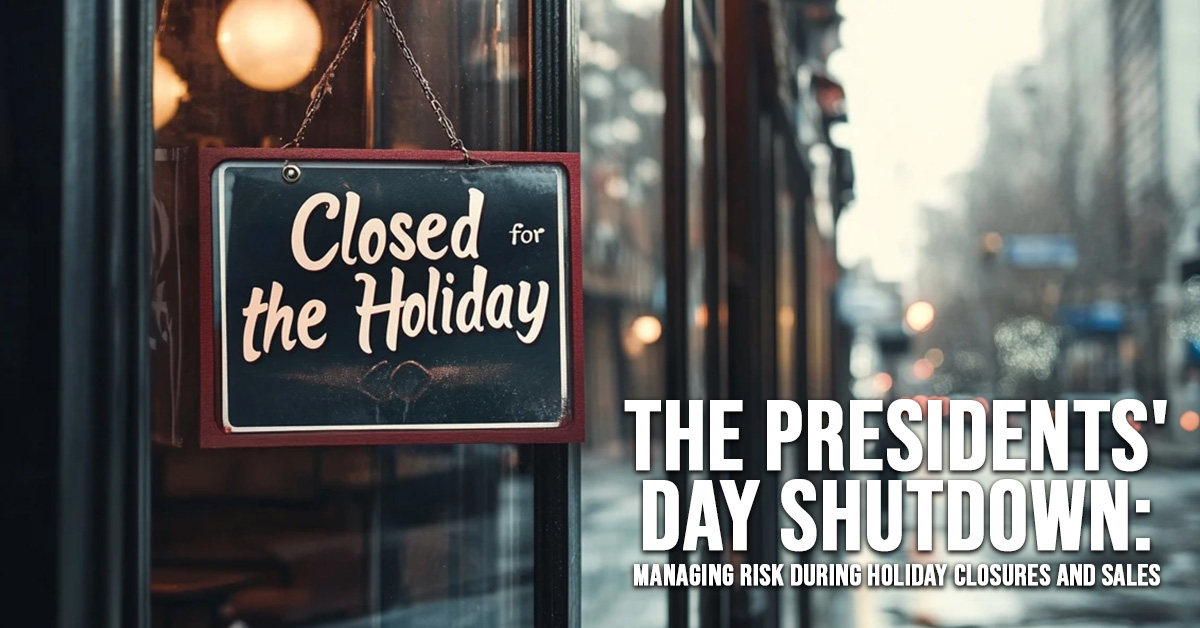
The Presidents’ Day Shutdown: Managing Risk During Holiday Closures and Sales
Presidents’ Day weekend creates a “split” in the business world. For many professional service firms, it’s a three-day weekend of closure and rest. For the retail and automotive sectors, it’s one of the busiest sales periods of the first quarter. Regardless of which side your business falls on, the mid-February holiday introduces specific risks that your Commercial Insurance must address.
Managing a business during a holiday isn’t just about scheduling; it’s about identifying the vulnerabilities that arise when the usual routine is broken.
- The Risk of the Vacant Office
For businesses that close on Monday, February 16th, the building will sit empty for approximately 60 consecutive hours. This “silent period” is a peak time for undetected property damage.
- Freeze-Thaw Damage: If a pipe freezes and bursts on Saturday night, it won’t be discovered until Tuesday morning. In that time, thousands of gallons of water can destroy equipment and inventory.
- Theft and Vandalism: Burglars often target business parks during holiday weekends, knowing that response times are slower.
- Mitigation: Ensure your Commercial Property Insurance is up to date and that you have a “holiday check-in” protocol. Have a manager or security service walk the premises at least once during the long weekend to check for leaks and security breaches.
- Retail Liability: The Surge Risk
If your business is hosting a Presidents’ Day sale, your primary concern is General Liability. Increased foot traffic leads to an increased risk of slips, trips, and falls.
- Winter Hazards: February weather is unpredictable. If you have a surge of customers, you must be hyper-vigilant about clearing slush and ice from entryways.
- Staffing Levels: Under-staffing during a busy sale can lead to chaos, which in turn leads to accidents. Ensure your staff-to-customer ratio allows for a safe shopping environment.
- Employment Practices and Holiday Pay
Presidents’ Day is a federal holiday, but it is not a “mandatory” holiday for private employers.
- The Wage/Hour Trap: If your employee handbook states that Presidents’ Day is a paid holiday, you must follow that policy or risk a wage and hour claim (covered under Employment Practices Liability Insurance, or EPLI).
- Holiday Pay: If you require employees to work on Monday, ensure your pay structure (e.g., time-and-a-half) is clearly communicated and compliant with local labor laws.
Whether you are locking the doors or opening the floodgates for a sale, February 16, 2026, requires a plan. Review your property limits, confirm your liability coverage, and ensure your staffing policies are as clear as they are compliant. A little holiday preparation goes a long way in protecting your business’s bottom line.